THE MAGNETISM OF CALVINISM
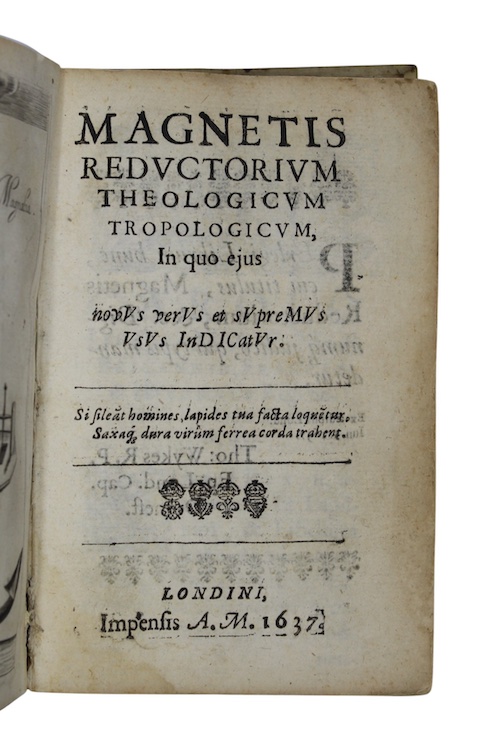
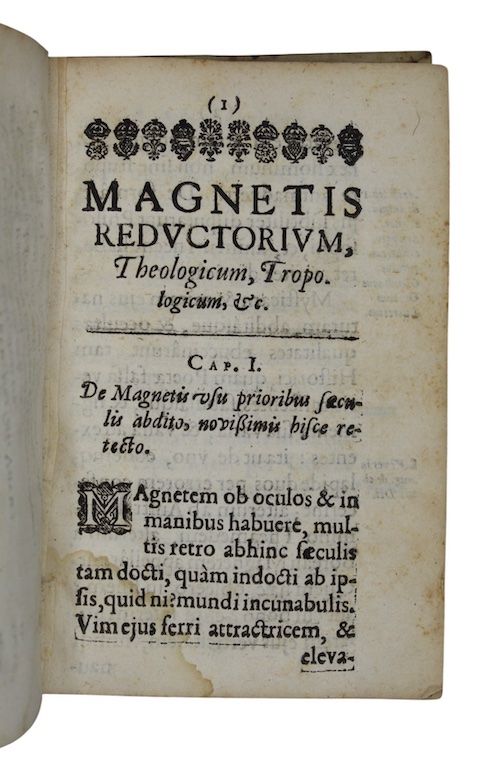
Magnetis reductorium theologicum tropologicum, In quo ejus.
Londini [i.e. London].
Impensis A. M., 1637.
First edition, second issue.
8vo.
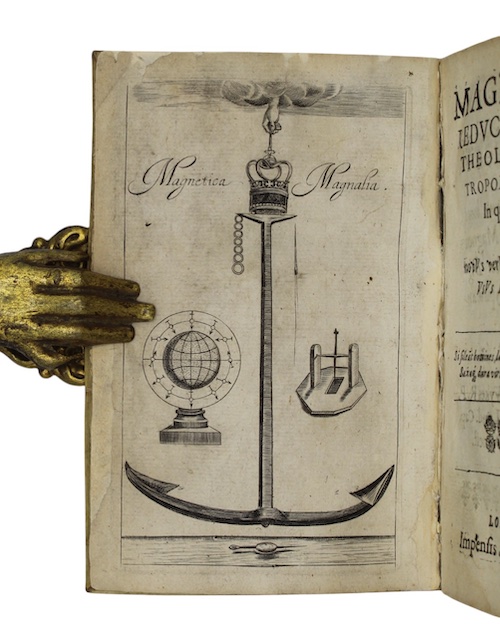
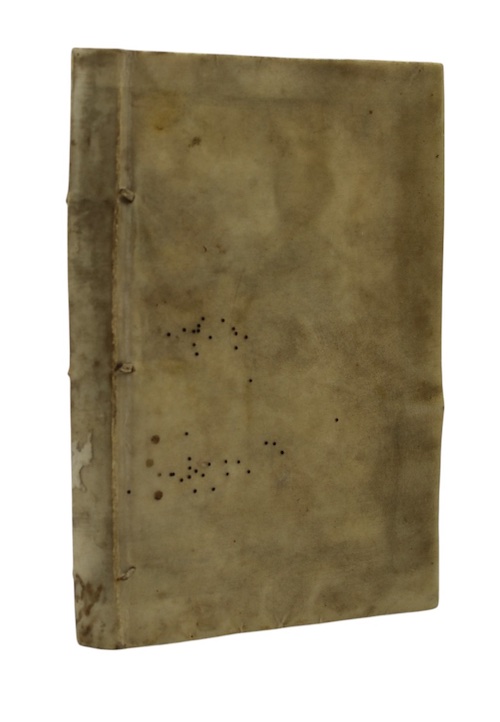
[28], 162pp. With an engraved frontispiece depicting an anchor and two instruments (not included in collation), and without initial blank. Neatly recased (using frontispiece remounted at gutter) within contemporary limp vellum. An unpressed copy, with some marking to vellum.
A curious work of Calvinist puritanism, masquerading as a treatise - complete with a fine engraved frontispiece - on the magnetic properties of a lodestone, by the well-known puritanical preacher of Ipswich Samuel Ward (1577-1640).
Ward had studied at St. John's, Cambridge and was subsequently a founding fellow of Sidney Sussex, known for his fiery rhetoric. Frequently confused with another puritan of the same name (1572-1643 who served as college head of Sidney Sussex), the fact that the Ipswich preacher bequeathed a collection of lodestones in his will is surely proof positive of his authorship of this work. Ward practised at Paul's Cross in addition to his near three-decade long occupancy of St. Mary le Tower in Ipswich, and was frequently reported to the ecclesiastical authorities. It was not until 1635, however, that his non-conformity caught up with him. With Laud now archbishop of Canterbury, Ward was charged with preaching against set prayers, and conventions such as bowing at the name of Jesus, and questioning the very tenets of the English organised church, he was removed from his position, suspending from any minister, ordered to pay £50, and briefly imprisoned. His popularity in Ipswich, a hotbed of puritanism, helped to lead - on the ejection of several other ministers - to riots in the street.
First published in two settings in 1637, this second issue is complete with an additional table of contents not present in the first, Ward's work was later translated into English (by the puritan MP Sir Harbottle Grimston) as The wonders of the load-stone (London, 1640), wherein the extended metaphor of the lodestone's altering effects on iron - for the power of Jesus on human will - is more easily identified. Dedicated to King Charles I, Magnetis reductorium condemns popery and outlines his adherence to the doctrine of justification by faith alone.
Ward had studied at St. John's, Cambridge and was subsequently a founding fellow of Sidney Sussex, known for his fiery rhetoric. Frequently confused with another puritan of the same name (1572-1643 who served as college head of Sidney Sussex), the fact that the Ipswich preacher bequeathed a collection of lodestones in his will is surely proof positive of his authorship of this work. Ward practised at Paul's Cross in addition to his near three-decade long occupancy of St. Mary le Tower in Ipswich, and was frequently reported to the ecclesiastical authorities. It was not until 1635, however, that his non-conformity caught up with him. With Laud now archbishop of Canterbury, Ward was charged with preaching against set prayers, and conventions such as bowing at the name of Jesus, and questioning the very tenets of the English organised church, he was removed from his position, suspending from any minister, ordered to pay £50, and briefly imprisoned. His popularity in Ipswich, a hotbed of puritanism, helped to lead - on the ejection of several other ministers - to riots in the street.
First published in two settings in 1637, this second issue is complete with an additional table of contents not present in the first, Ward's work was later translated into English (by the puritan MP Sir Harbottle Grimston) as The wonders of the load-stone (London, 1640), wherein the extended metaphor of the lodestone's altering effects on iron - for the power of Jesus on human will - is more easily identified. Dedicated to King Charles I, Magnetis reductorium condemns popery and outlines his adherence to the doctrine of justification by faith alone.
ESTC S119461. STC 25028.
£ 950.00
Antiquates Ref: 26410